
Repointing is one of the most commonly needed and most frequently overlooked maintenance tasks on tile roofs across Newcastle. The pointing compound that seals the edges and joints of ridge capping, hip capping, and other mortar-bedded roof elements has a finite lifespan. Once it cracks, shrinks, or falls away, water finds a direct path into the roof structure not gradually, but immediately in the next significant rain event. Repointing at the right time is a straightforward, cost-effective job. Left too long, the consequences are a leaking roof, potential internal water damage, and a repair scope that has grown well beyond what early intervention would have required.
Newcastle Tile and Metal Roofing carries out roof repointing across Newcastle and the surrounding region for both residential and commercial tile roofs. Call us on (02) 4071 6013 for a free inspection and quote, or read on to understand what repointing involves and when your roof is likely to need it.
Pointing is the layer of compound applied along the exposed edges and joints of ridge caps, hip caps, and other mortar-bedded elements on a tile roof. Its job is to seal the junction between the cap and the roof surface the mortar bed provides the structural bond that holds the cap in place, while the pointing provides the weatherproof seal that prevents water from tracking down behind the cap and into the roof cavity.
The two work together, but they are distinct elements with different lifespans and different failure modes. The mortar bed, when it fails, causes the cap to become loose or displaced. The pointing, when it fails, allows water entry even if the cap itself is still firmly seated. A ridge cap can appear perfectly secure and solid underfoot while having pointing that has fully separated from the tile surface and is allowing every rainfall to introduce water into the roof below.
On older Newcastle homes, the pointing was typically applied using a rigid cement-based mix the same or similar material to the mortar bed itself. This rigid compound does not accommodate the thermal movement that a roof experiences through Newcastle’s seasons. As the roof heats and cools daily and across seasonal cycles, the mortar expands and contracts slightly. Over years and thousands of cycles, this movement progressively fractures a rigid pointing compound, opening micro-cracks that eventually widen into visible gaps and then into sections that fall away entirely.
Modern repointing uses a polymer-modified compound that incorporates flexibility agents allowing it to move slightly with the roof surface without cracking. This flexible pointing significantly outlasts the rigid cement mix used historically and is the correct material for any repointing job carried out today. Applying fresh rigid cement over deteriorated rigid cement is a short-term fix that will fail again on the same timeline as the original.
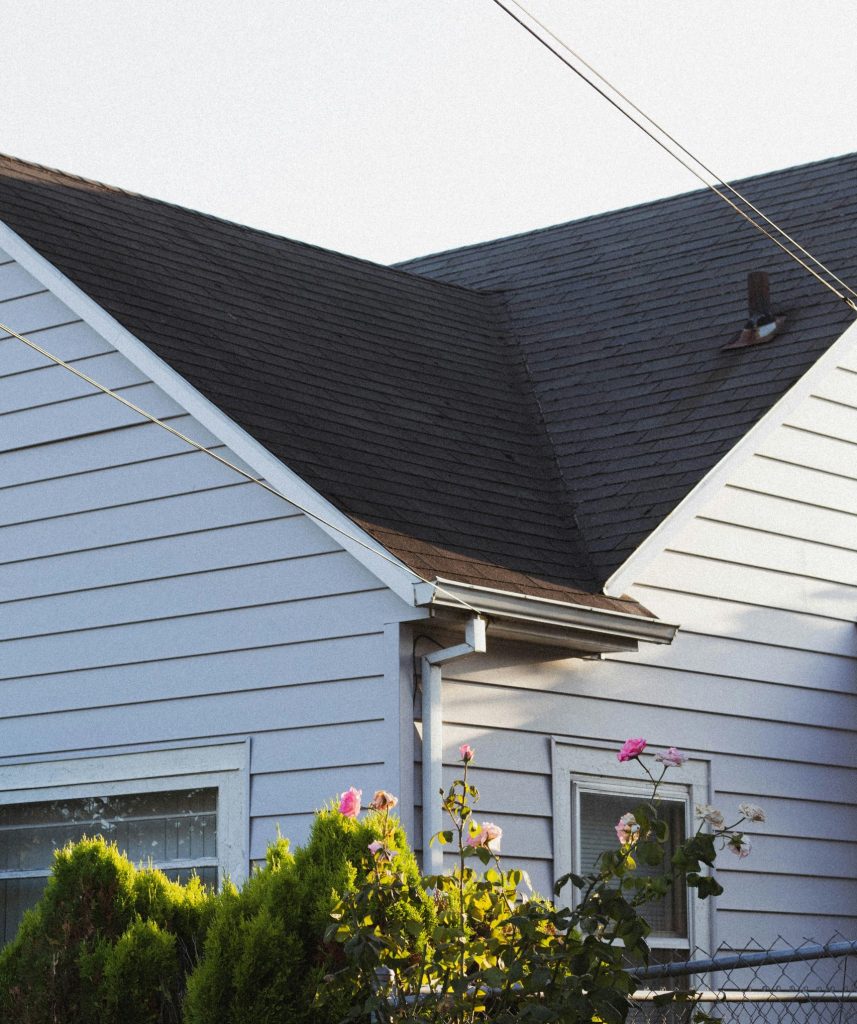

Because the ridge and hip lines sit at the highest and most visible points of the roof, pointing deterioration can sometimes be observed from ground level but often cannot. Here are the signs to look for from below and inside the house.
Visible cracks or gaps along the ridge line. On a sunny day, standing back from the property and sighting along the ridge, cracked or missing pointing sometimes shows as shadows or gaps between the cap and the mortar line. Where pointing has fallen away in larger pieces, the gap is visible clearly. Where it has simply cracked and separated, it may appear intact from a distance.
Pieces of grey mortar in the gutters or on the ground. Fragments of old cement-based pointing falling from the ridge or hip lines are a direct and reliable indicator that repointing is needed. This material does not fall from the roof intact it only reaches the ground once the bond to the cap surface has broken down and weathering has loosened it. Finding this material in gutters or on paths below the eave line means the pointing above is failing.
Water stains on the ceiling near the ridge. The ridge and hip lines are the highest points of the roof structure, and water entering through failed pointing tends to flow downward through the roof cavity and emerge on the ceiling in the upper central area of rooms directly below the ridge. A stain in this location that appears or worsens after rain is a strong indicator of pointing failure on the ridge above.
A roof that is fifteen or more years old with no repointing history. Even without obvious visible symptoms, a tile roof of this age in Newcastle that has never been repointed warrants an inspection. The thermal cycling this region subjects roofs to means that the original rigid cement pointing on most pre-2000 roofs has reached the point of significant deterioration, whether visible from the ground or not. Our Roof Inspections service provides a close-range assessment that confirms the actual condition.
Repointing and re-bedding are both part of ridge capping maintenance, and they are frequently confused or conflated. Understanding the difference matters because the appropriate scope of work and the cost is meaningfully different between the two.
Repointing addresses the pointing compound along the cap edges and joints. It is carried out when the mortar bed beneath the cap is still structurally sound and the cap is held firmly in position, but the pointing has cracked, separated, or fallen away. The process involves cutting back or removing the deteriorated pointing, cleaning the surface, and applying fresh polymer-modified pointing compound along all exposed edges and joints.
Re-bedding addresses the mortar bed that holds the cap in position. It is needed when the bed has dried out, shrunk, and lost its structural bond when the cap can be moved by hand or is visibly out of alignment. Re-bedding involves lifting the cap, removing all old mortar from both the cap and the roof surface, and re-laying the cap in a fresh mortar bed. Once the bed has set, pointing is applied over the fresh bedding.
The correct sequence matters. Applying fresh pointing over a failed mortar bed is a false economy the pointing sits on a substrate that is no longer bonded to the roof, and it will not hold. If the cap moves with the underlying bed failure, the fresh pointing will crack and separate again. Re-bedding followed by repointing is the correct approach when the bed has failed, regardless of the cost difference.
During our inspection, we assess the mortar bed and the pointing separately and tell you which work is needed and why. If repointing alone is sufficient, we will say so. If re-bedding is required, we will show you the evidence. Our Ridge Capping Restoration page covers both processes in full detail and explains how we approach a complete ridge capping restoration project.
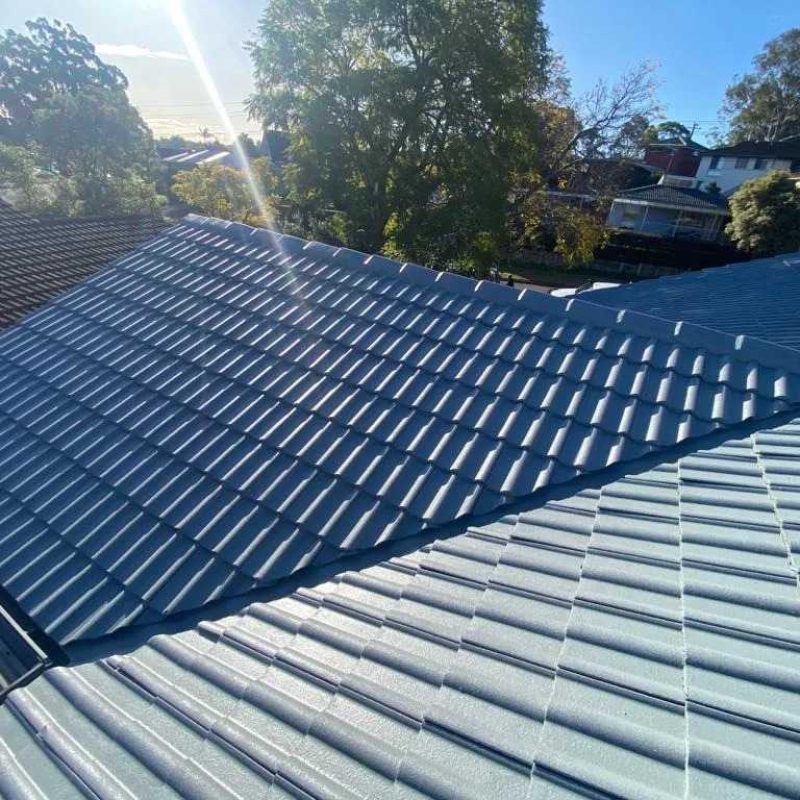
A repointing job carried out correctly follows a consistent process that ensures the fresh pointing bonds properly and performs as intended over its service life.
Inspection and assessment. Before any material is removed or applied, we inspect the full length of the ridge and hip lines to assess the condition of the pointing and the mortar bed beneath it. We probe the mortar bed at multiple points to confirm whether it is structurally sound or whether re-bedding is needed in addition to repointing. We check each cap individually for movement, misalignment, and cracking. Any cracked or broken caps are noted for replacement.
Removal of deteriorated pointing. The existing pointing is cut back or ground off to expose the substrate beneath. This step is essential applying fresh pointing over the surface of deteriorated old pointing produces a thin layer that does not bond properly and will fail prematurely. The substrate must be clean and sound before the new compound is applied.
Surface preparation. Once the old pointing is removed, the surface is cleaned of loose material, dust, and organic growth. On older roofs with significant moss or lichen present in the mortar joints, a biocidal treatment may be applied to eliminate growth before the new pointing is installed.
Application of polymer-modified pointing compound. The fresh compound is applied along all exposed edges and joints, worked into the joint to ensure full contact with both surfaces, and finished to an appropriate profile that sheds water away from the joint rather than allowing it to pool. The profile and finish of the pointing affects how long it performs, and this step is carried out carefully rather than rushed.
Cap inspection and replacement. Any caps identified during the inspection as cracked or broken are replaced during the same visit where replacements are available. The pointing is then completed over the full length including replaced caps.
Final check and clean-up. Once the pointing has been applied across the full scope, we inspect the finished work along the full ridge and hip length, remove any excess compound from the tile surface, and clean up debris from the roof and gutters.
If the inspection reveals that the roof needs more than just repointing widespread tile deterioration, valley gutter issues, or failing flashings we will advise on those items separately. A repointing job is often the starting point for a broader restoration and remediation conversation, particularly on older Newcastle roofs that have multiple elements due for attention.
How long does repointing last? Polymer-modified flexible pointing compound applied correctly to a sound mortar bed typically lasts fifteen to twenty years in Newcastle conditions. Roofs in coastal locations or with significant south-facing exposure to prevailing weather may be at the shorter end of that range. The original rigid cement pointing used on pre-2000 roofs had a shorter effective lifespan, which is why so many older Newcastle roofs now have pointing that has fully deteriorated. Any roof that has been repointed with modern flexible compound and is inspected every two years as part of routine roof maintenance should not need repointing again for well over a decade.
Can I repoint my own roof? Repointing requires working on a sloped roof surface, often at height, and applying a compound that needs to be correctly mixed, applied, and profiled to perform properly. The safety risk of working at height on a sloped surface without appropriate training and equipment is significant. Beyond the safety concern, incorrect mixing ratios, inadequate removal of old pointing, or poor application technique produce repointing that fails within a few years rather than lasting the full service life of the product. It is a job that is straightforward for an experienced roofer and genuinely difficult and risky for a homeowner to carry out safely and correctly.
Is repointing the same as tuckpointing? Tuckpointing is a masonry term most commonly associated with brickwork, where contrasting coloured mortar is used to create the visual impression of fine joints. In a roofing context, the term is sometimes used loosely to refer to ridge cap repointing, but the processes are different. Roof repointing is the application of flexible compound to seal ridge and hip capping edges and joints. The two terms are occasionally used interchangeably in the roofing industry in Australia, but the product used for roof repointing is specifically a polymer-modified flexible compound, not a traditional masonry mortar.
My roofer said I need re-bedding, not just repointing. How do I know if that is correct? The reliable test is whether the caps move when pressure is applied. A cap with a failed mortar bed will shift or rock when pushed. A cap with sound bedding will not move regardless of the condition of the pointing. If your roofer says re-bedding is needed but the caps are visibly solid and do not move, it is worth asking for the evidence — what does the mortar bed look like, and has it been probed? A legitimate re-bedding recommendation should come with a clear explanation of what the inspection found. Our approach is to show you the evidence of any finding before recommending work that goes beyond the minimum necessary.
Will repointing stop my roof from leaking? If failed pointing is the source of the leak, yes — correct repointing will stop water entry at the ridge or hip line. If the leak has another cause — a cracked tile, a failed flashing, a corroded valley — repointing the ridge will not address it. Our inspection process identifies the source of any leak before we recommend a repair pathway, so you are not paying for work that will not solve the problem. Our Roof Leak page explains how we trace and diagnose leaks that may or may not be pointing-related.
Does repointing need to be done before or after a roof restoration? Repointing is always carried out as part of the preparation phase of a roof restoration, before the surface coating is applied. The sequence matters because applying a coating over failed or deteriorating pointing would seal in a fault that will open up again as the coating ages. Where repointing is needed as a standalone job outside of a full restoration context, it can be carried out independently and the timing relative to any future restoration is not a constraint modern flexible pointing is fully compatible with restoration coatings applied over it at a later date.
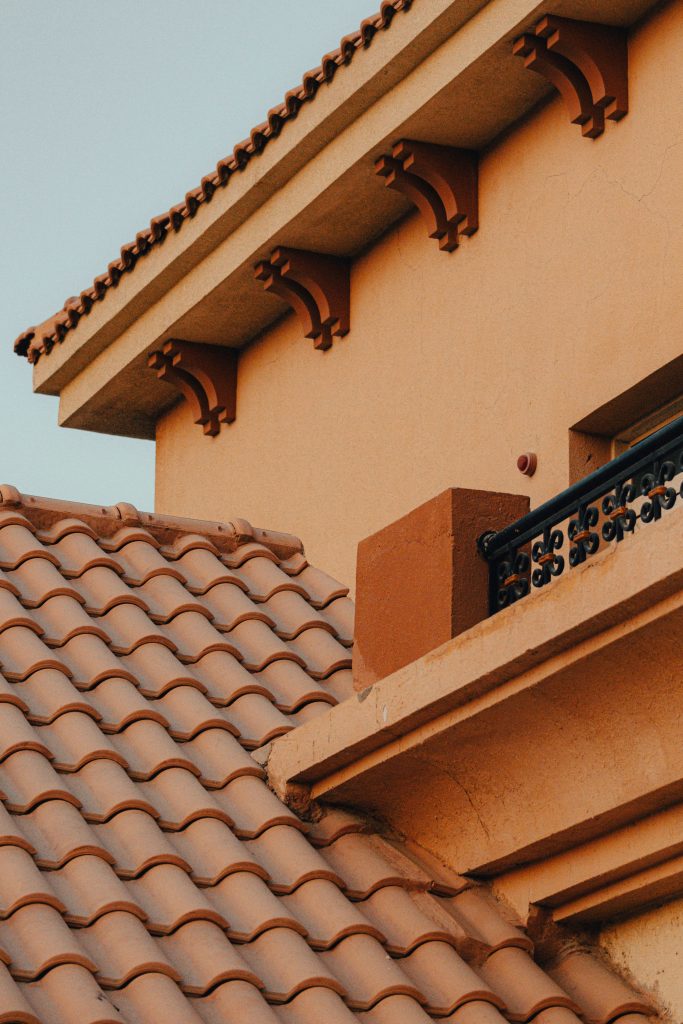
Call Newcastle Tile and Metal Roofing on (02) 4071 6013 or visit our Contact Us page to arrange a free inspection and quote. We are available Monday to Sunday, 24 hours a day.

Opening Hours: Monday to Sunday – 24 hours